Notice
You are currently browsing the website for customers from United Kingdom. We recommend switching to the United States version of the site, optimized for your region.


Machines and production lines run in multi-shift operation, exposed to vibration, dust, oil and electromagnetic interference. Every failure of a sensor or connection stops production and makes servicing more expensive. The design therefore depends on robust connectors and housings, error-free communication between devices, a stable power supply and available diagnostics.
We have arranged the sections in the order a signal passes through a machine: from control and sensing through communication, operation and power supply to cabling and maintenance. We cover production machines, manufacturing automation, metering, safety and hall lighting.


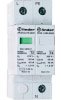
A smaller machine or an auxiliary task on the line can be handled by the Arduino Opta DIN rail PLC. It runs on 12 or 24 V DC and communicates via Ethernet, RS-485 and USB. Expansion modules add 16 programmable inputs with eight relay outputs, or analogue inputs and outputs. The phase voltages of the machine supply are watched by a three-phase Finder monitoring relay for 400 V AC.
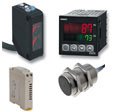
In production halls, paint shops and chemical stores, concentrations are measured by gas sensors from Sensirion, Nissha FIS and SGX Sensortech. This application includes 64 types, for example ozone and methane modules, an NDIR methane sensor with a 0 to 100 % range and calibrated CO2 sensors. Airflow in ventilation and filters is evaluated by the Sensirion SDP810 differential pressure sensor for ±500 Pa.
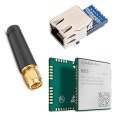
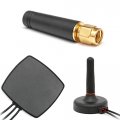
A machine with a serial interface can join the network via Ethernet modules. These include the Lantronix UDS1100 device server and RS232, RS485 and CAN to Ethernet converters. Without a wired network, data is sent by a USR IoT cellular modem that converts RS485 to 4G LTE and mounts on a DIN rail. For your own devices, there is a 17.6 × 15.7 mm Quectel NB-IoT module and antennas from Antenova and 2J Antennas.
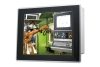
The operator controls the machine through panel PCs from AAEON and Lexsystem. The larger model has a 15.6" Full HD display and an Intel i3-1215UE processor, while the smaller 10.1" variant runs on a Celeron J1900. For your own HMI, 3.5" and 4.3" intelligent TFT displays are available. Development is sped up by a 7" board with an STM32H7 microcontroller and LAN, CAN FD and RS485 interfaces.
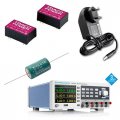
Galvanic isolation of control boards is provided by TRACOPOWER isolated DC/DC converters in SIP8 packages. The 10 W type works with an input voltage of 9 to 36 V. Local voltages for the processor or sensors are generated by non-isolated SIP3 switching regulators with inputs up to 36 V. They replace linear regulators and run cooler.
Sensors and actuators are connected via M12 and M8 industrial connectors from Attend, Hirschmann and Lumberg Automation. You will find M8 sensor connectors rated IP67 and X-coded M12 connectors for Ethernet. Lumberg also supplies distribution boxes that collect signals from several sensors. Ready-made Lumberg M12 sensor cables 5 m long are available with PVC or PUR jackets. Cabling is completed by Harting and TE SUPERSEAL rectangular connectors and Lapp Ethernet cable. Joints are protected by TE 3:1 heat-shrink tubing, and Phoenix Contact push-in distribution blocks simplify wiring in the cabinet.
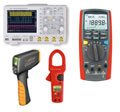
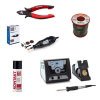
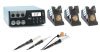
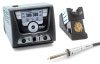
Faults can be traced right at the machine with a Rohde & Schwarz handheld oscilloscope with 350 MHz bandwidth and 5 GS/s sampling. Fluke supplies a multimeter rated CAT III 1000 V. Compressed air leaks are located by a Fluke acoustic imager with 64 MEMS microphones. Board repairs are handled by the three-channel Weller WXR3 station with 420 W of power.


We will help you select components for a machine, a line or maintenance. For some products, you can order a sample to verify before series deployment. Send us the requirements of your machine or line and we will prepare a recommendation.